Full-cycle wing design for a VTOL (Vertical Take-Off and Landing) UAV — from airfoil selection and load analysis through structural design, FEA simulation, and a complete DFM/DFA pass to make the wing buildable with off-the-shelf components. The wing uses a carbon fiber tube spar system with a 3D printed PA6-CF skin, optimized for high-altitude, heavy-payload missions.
Wing Design
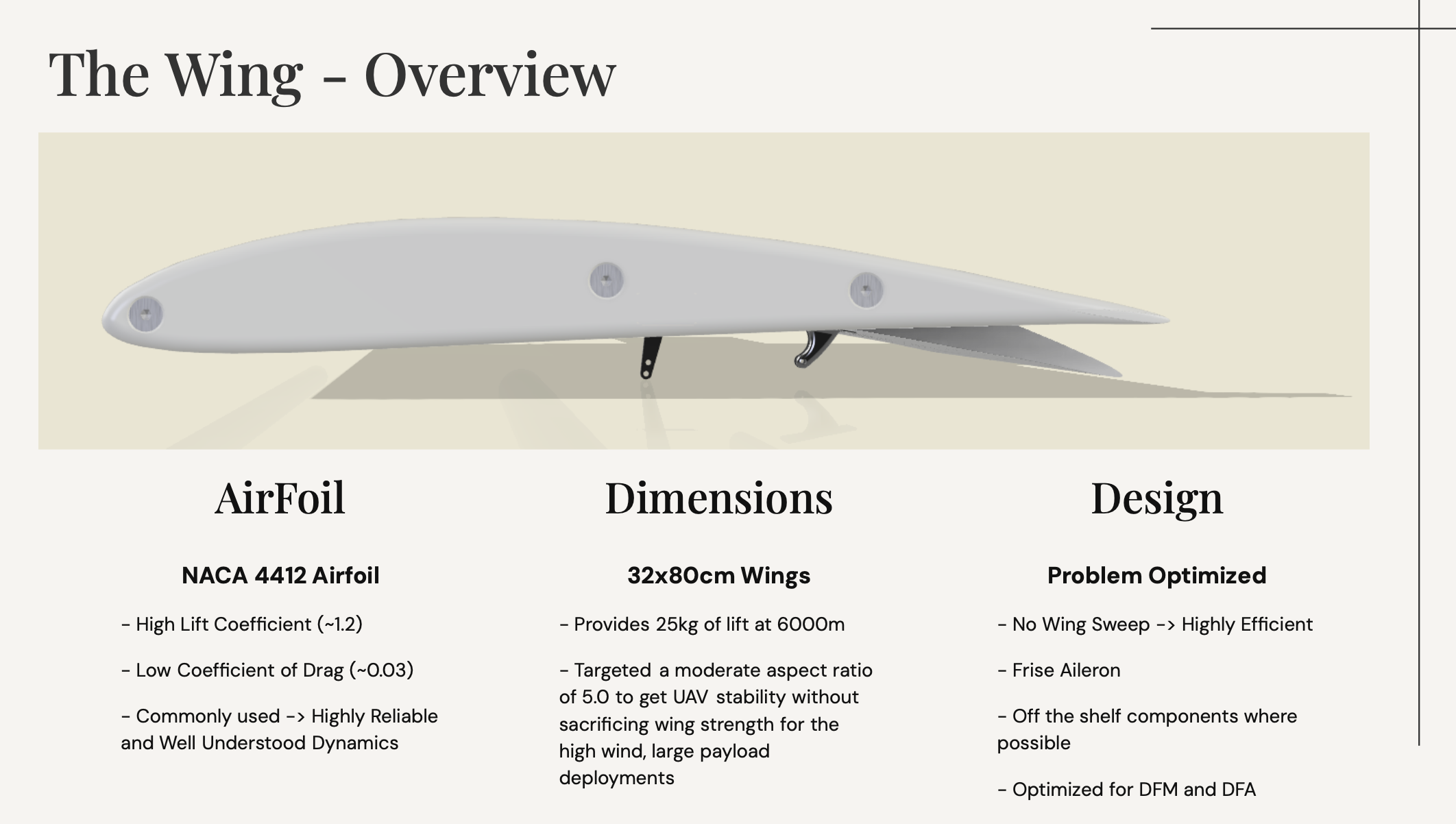
NACA 4412 airfoil selected for its high lift coefficient (~1.2), low drag (~0.03), and well-understood flight dynamics. 32×80 cm planform with no sweep — maximizes aerodynamic efficiency. Frise aileron for roll control. Aspect ratio of 5.0 balances span efficiency against structural requirements for high wind, large payload missions. Designed for DFM/DFA from day one — off-the-shelf components wherever possible.
Internal Structure
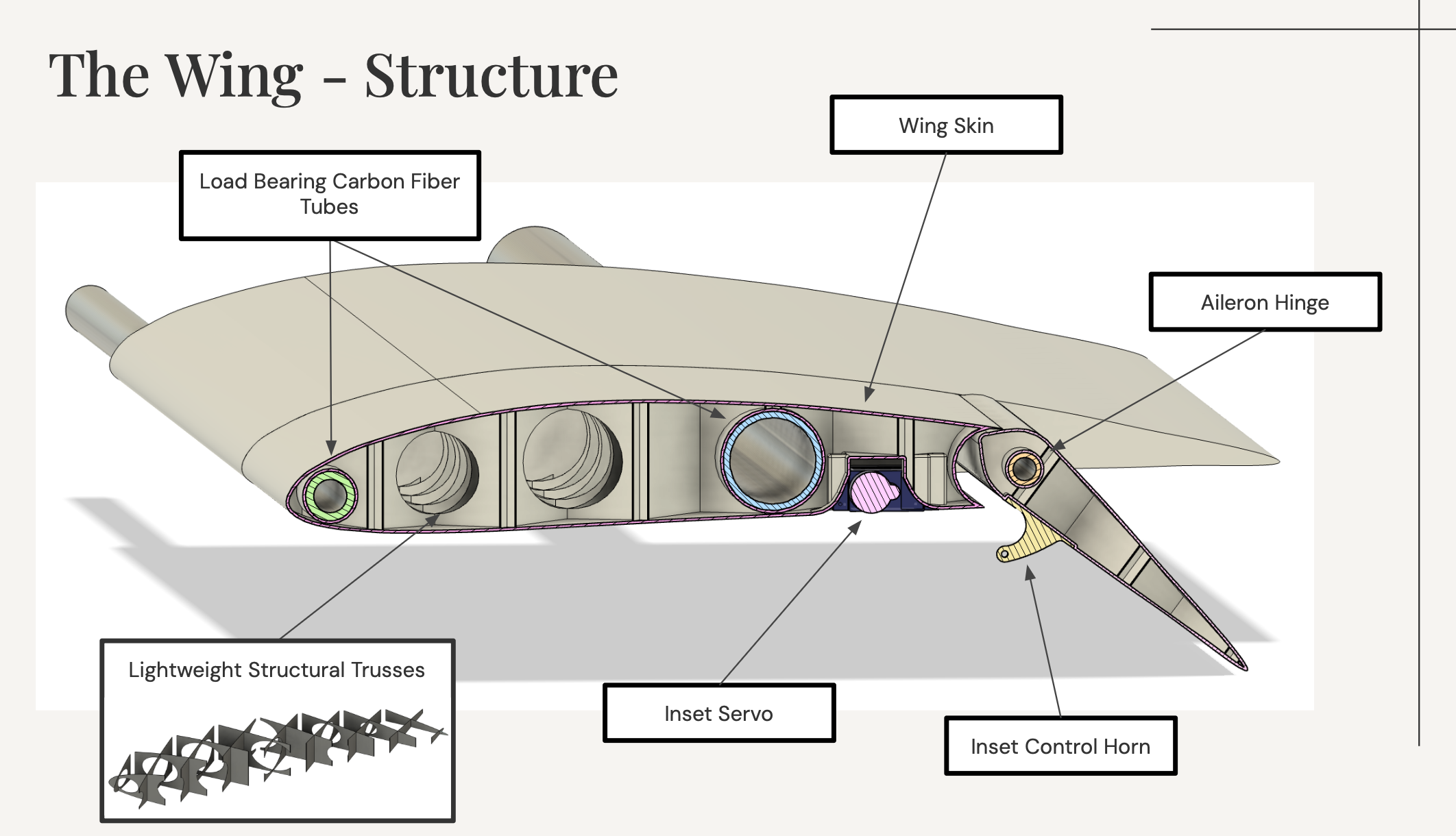
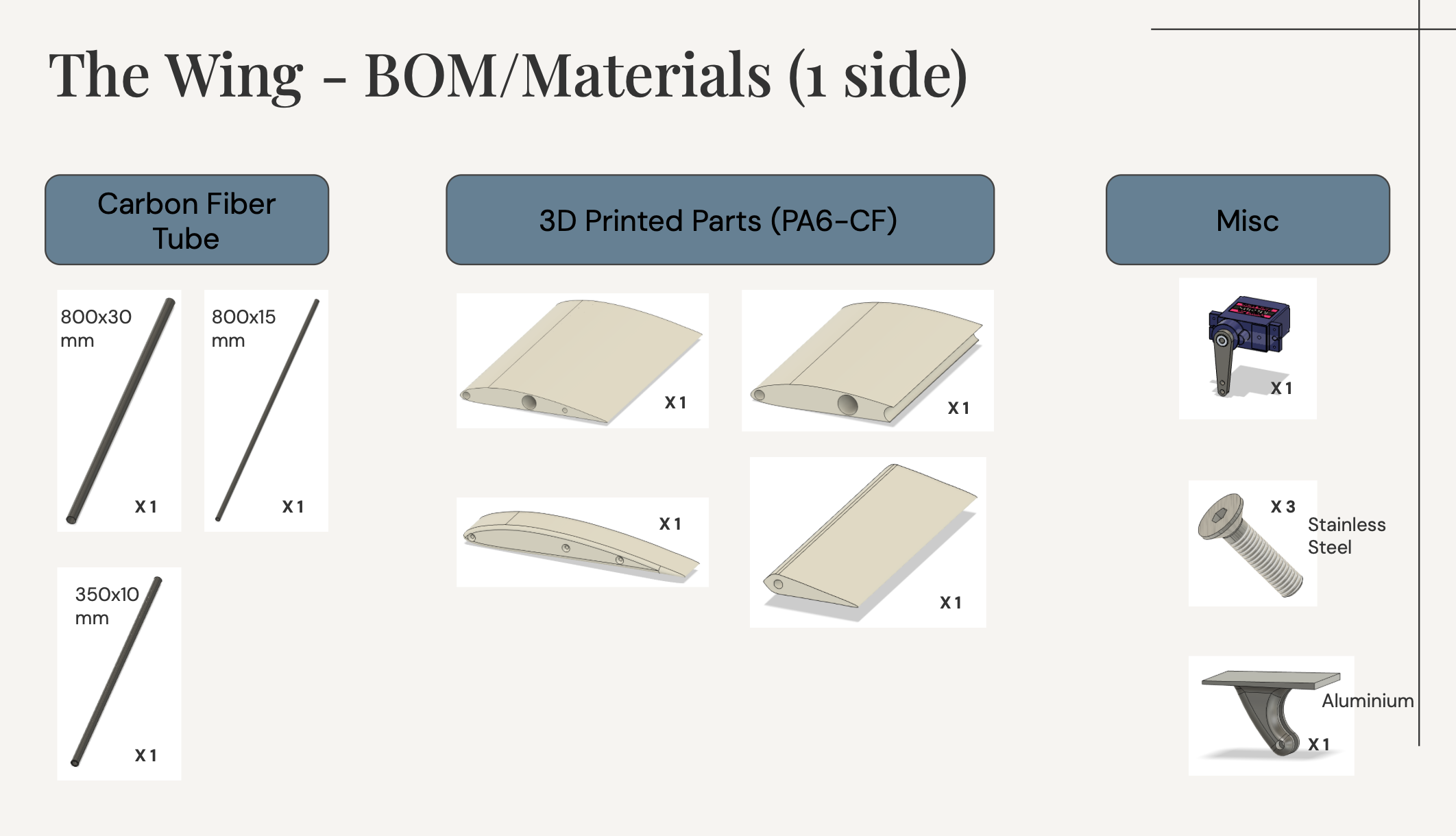
Three carbon fiber tubes form the primary load-bearing spar system (800×30mm, 800×15mm, 350×10mm). The PA6-CF printed skin panels slot over the tube frame. Lightweight structural trusses printed in PA6-CF transmit loads between tubes and resist skin buckling. An inset servo drives the Frise aileron via an integrated control horn — both recessed flush into the wing to minimize drag.
Load Capacity
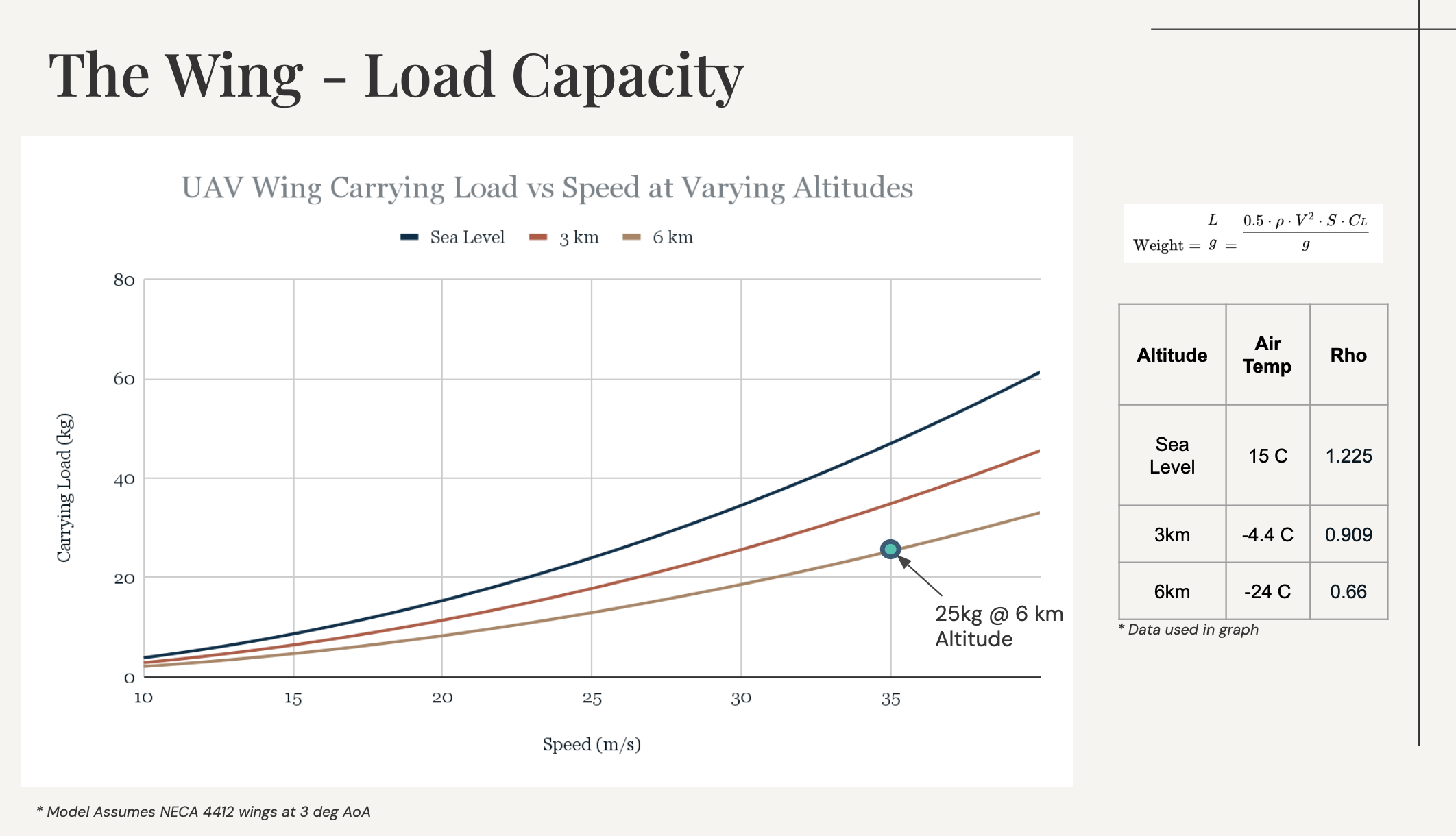
Lift modelled using the standard lift equation across sea level, 3 km, and 6 km altitudes using ISA air density values. At 6 km (ρ = 0.66 kg/m³, −24°C), the wing produces 25 kg of lift at 35 m/s — the design cruise point. At sea level the same speed delivers over 60 kg, giving substantial margin at lower altitudes.
FEA & Thermal Simulation
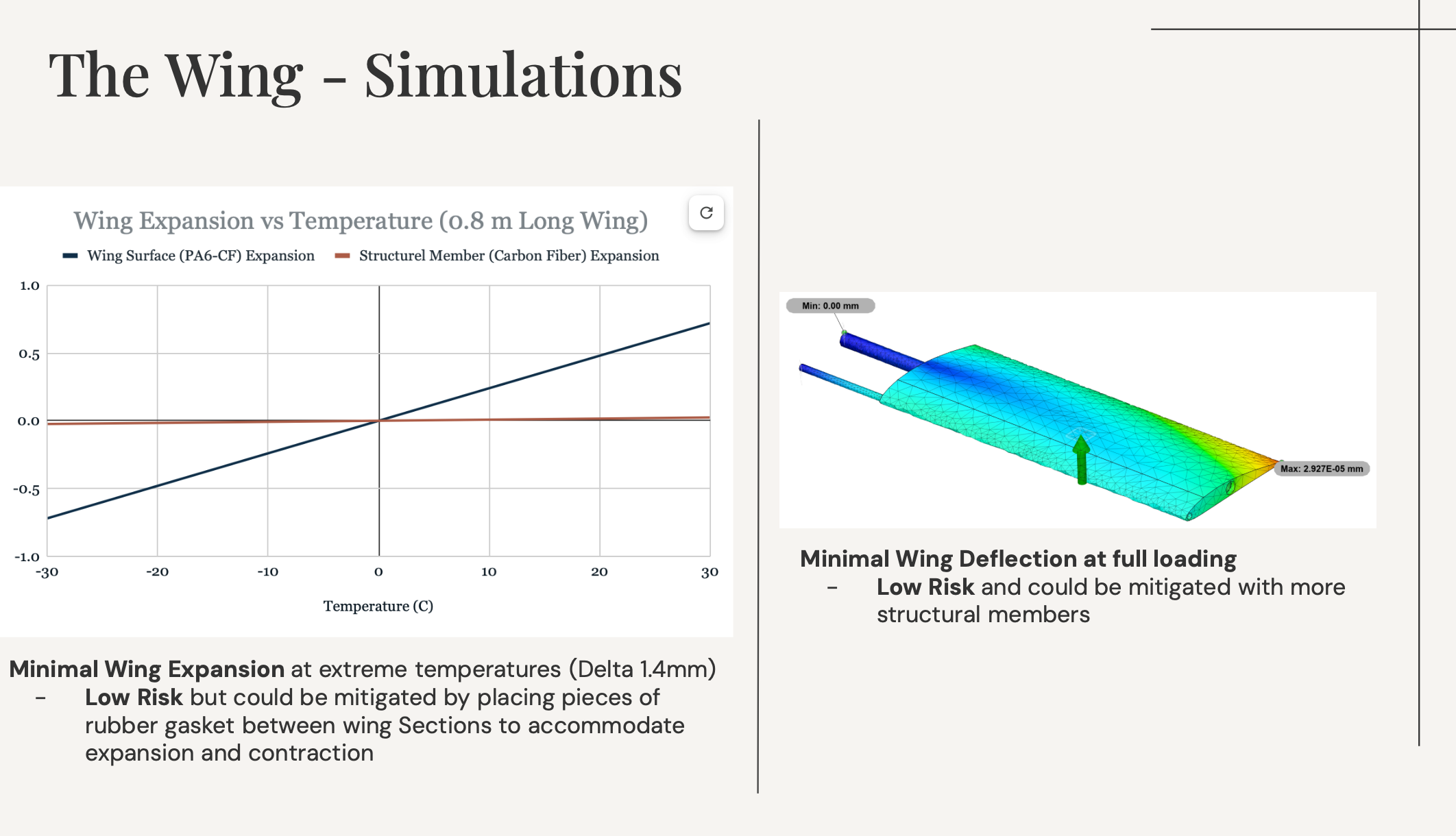
Two key simulations validated the design. Thermal expansion analysis showed a maximum delta of 1.4 mm across the 0.8 m span between −30°C and +30°C — low risk, mitigable with rubber gaskets between wing sections. FEA deflection analysis under full load showed a maximum tip deflection of 2.927×10⁻⁵ mm — effectively zero. Both results confirm the structural design is well within safe operating margins.
BOM / Materials (per side)
The wing was designed around readily available materials to keep cost low and lead times short. Three carbon fiber tubes form the spar structure. Four PA6-CF printed panels make up the wing skin. Hardware is minimal — one servo, three stainless steel screws, and one aluminium control horn bracket.
Airfoil & Aerodynamics
- Airfoil: NACA 4412 — CL ~1.2, CD ~0.03, well-understood dynamics
- Planform: 32×80 cm, no sweep, aspect ratio 5.0
- Control Surface: Frise aileron — reduces adverse yaw, inset servo and control horn
- Design Point: 25 kg lift at 6 km altitude, 35 m/s cruise speed
Structure & Materials
- Spars: Carbon fiber tubes — 800×30mm (main), 800×15mm (secondary), 350×10mm (root)
- Skin: 4× PA6-CF 3D printed panels — high specific stiffness, printable geometry
- Internal: PA6-CF structural trusses — load transfer and skin buckling resistance
- Hardware: 1× servo, 3× stainless steel screws, 1× aluminium control horn bracket
Simulation Results
- Thermal Expansion: Max delta 1.4 mm across full temperature range (−30°C to +30°C) — low risk
- FEA Deflection: Max tip deflection 2.927×10⁻⁵ mm at full load — negligible
- Risk Rating: Both failure modes rated Low Risk with simple mitigations identified